Showing posts with label communication. Show all posts

Monday, February 15, 2010

Love, FaceBible style

From The Edge by The Oregonian

Well, another Valentine's Day has come and gone, and here at Edge HQ we still can't update our Facebook relationship status to anything above "sitting alone on couch in underwear eating Cheetos."

But it could be worse. We could be in one of those Old Testament relationships.

Paradise lost

Eve just found an apple tree. (drool)

God Ix-nay on the apples-way.

Serpent Dude, you are so uptight about that tree. Go for it, E.

Adam Serpent, stay away from my woman. Eve, don't listen to him.

Eve Hey, S., you talked me into it! (giggle)

Eve Yum!!!

God I am totally un-friending you.

God Adam, too.

Adam has changed his relationship status to "It's Complicated."

Whole lotta pain

Lot is chillin' at home in Sodom.

Angel We still on for dinner 2 nite?

Lot You bet!

Sodomite Y'all want coffee, tea or me? ;)

God Gag me. I am totally un-friending all you Sodomites.

Angel Lot, meet me in Zoar ASAP. Bring the family. Don't look back.

Lot's Wife Zoar?? That hillbilly place? No way!

Lot It'll be OK, hon. I promise.

Lot's Wife But my parties! My furniture! My jewelry!

Lot Who cares?! God is TICKED! We gotta get outta his way!

Lot's Wife just turned into a pillar of salt.

Lot has changed his relationship status to "It's Complicated."

When love goes belly-up.

Jonah seems to be inside a whale.

Is that even possible?

Whoa, it stinks in here.

Jonah's Wife has changed her relationship status to "It's Complicated."

http://blog.oregonlive.com/edge/2010/02/mondays_edge_love_facebible_st.html?utm_source=twitterfeed&utm_medium=twitter

Saturday, June 7, 2008

The Church and the Arts


Just reading "The Gospel Accroding to Peanuts" by Robert L. Short.


You may know that Charles M. Shultz (creator of Charlie Brown, Snoopy and the other Peanuts gang) was a believer (same with B.C.'s Johnny Hart). He said:

"...if you do not say anything in a cartoon, you might as well not draw it at all. Humor which does not say anything is worthless humor. So I contend that a cartoonist must be given a cahnce to do his own preaching."

The book has a section on the church and the arts. It begins:

"'How shall we sing the Lord's song in a foreign land?' (Ps.137:4) is a question the Church, always finding itself in but not of the world, urgently needs to consider today..."

The discussion centers on communication to culture through culture. Short continues:

"Art has a way of getting around man's intellectual and emotional predjudices. This is because art always speaks indirectly--wheather in being the vehical for delivering a new answer, or in causing a new kind of question to be asked..."

He contends that art is a reflection into which we peer seeing ourselves. As such art is a great communicator of truth and the human condition; opening windows into the soul and exposing want and need--especially the need for Christ.

The aurgument is somewhat scholarly and lofty for ideolgies expressed through cartoon illustrations. erhaps Shultz was deeper than we have imagined, but, through his art, we "got it." Case in point. The section, if not the whole book is worth a skim.

Saturday, May 17, 2008

Bumper Sticker Culture


I just finsihed reading an excellent book titled Lord Save Us from Your Followers by Dan Merchant. I found the book both convicting and moving. Maybe that wasn't so much the book as it was the Holy Spirit. None-the-less Merchant "speaks the truth in love" and presents important ideas about grace, love, communication and cultural engagement that should be considered by all who call themself Christian.


Here is just one passage from the book:


"A bumber sticker is, quite possibly, the weakest, most strident form of communication possible

--because of its one-way nature. In this information age, communication styles are more influential than ever. I've identified four primary ways that have (seemingly) become accepted ways we communicate our ideas, both through the media and in person.


  • Myopia--our communication conveys our point of view exlusively. While our facts may be acurate, we lack context and, ultimately, understanding by ignoring information that doesn't put forward our agenda.

  • Hyperbole--our communication again conveys our point of view, but e exagerate the facts and distort the available information to create an intellecually dishonest and, possibly, more persuasive case for our agenda.

  • Hysteria--our communication conveys our point of view in an emotional and aggressive manner based primarily on our feelings, what we want to be true, and our blind desire to be right and see our agenda come to fruition.

  • Truth--our communication conveys as balanced a review of the facts as possible, including the weaknesses of our position and the strengths of the other's. The goal of communication is the illumination of reality, and, in this case, our agenda considers the well-being of all people, not just those who agree with us..."

In a nutshell, the book advocates active listening and sincere grace as the forum for bringing people closer to Christ. I highly recommend this read.

Thursday, March 6, 2008

A Former Pastor of Community Speaks

The Church was designed, in part, to function for koinia (fellowship); does it serve this function well or is it lacking?

It is lacking and does not serve this function well, IMHO. The church is too spread out geographically and folks have too many commitments to too many places and activities for true koinonia to take place.

How does effective communication aid the function and process of koinia?

Effective communication is essential to authentic relationships, which are at the core of koininia.

What has been your experience in the Church: Does it communicate well (both within and without)?

I know of no church that truly communicates effectively. Some do better than others. They are organizations that are protecting and withholding information as it suite their interests. Information is seen as power, and those who "communicate" hold that power. Withholding information is another form of power. They do not require people to talk face to face with those who are needing to communicate. They allow "dead" mechanisms to do this. This is not effective communication, in my book, but rather an abuse of power.

How might communication improve in the Church?

Communication can only improve in a church as they are dedicated to speaking the truth in love face to face with everyone. As long as communication is used as a form of power and control, there isn't much improving allowed.

How does communication relate to and/or effect community?

Communication makes or breaks community. It binds or frees community. It gives voice or silences community. It depends on who holds or gives away the power and control. I have lots of opinions about this...

Sunday, February 17, 2008

Interview with a person who has long served in the Church

The Church was designed, in part, to function for koinia (fellowship); does it serve this function well or is it lacking?

Generally, the way the American church is set up, I don't think it functions that well at fellowship. Small home groups do somewhat better. But if you get into a larger church with busy American lifestyles, most people stay somewhat superficial. I've never been able to see fellowship as a chili feed after carolling around the neighborhood every Christmas, for instance. Or an ice cream party after the church business meeting. People just chat. Chatting doesn't fit my definition of fellowship.

How does effective communication aid the function and process of koinia?

What is meant by "effective communication"?

What connects and has results.

Generally, people (Americans) don't share their hearts and lives in a deep meaningful way unless they feel safe. And safety is usually built over time and consistency and a small enough group setting. If people take time, yes, effective communication can happen.

What has been your experience in the Church: Does it communicate well (both within and without)?

I was in a small church for years that communicated well on some levels within, but was never very good at communicating without. At least, not communicating in a way that made large numbers of people feel like they were part of it. To this day, as dearly as I love many of the people, they have their own "in" language and culture and have no real idea how very exclusive that makes them appear to others. I know how to speak their language, but after being out of the church for years it kind of makes me gag.

Now I'm involved in a larger mainline church where the pastor struggles constantly with trying to find out how we can effectively impact our world for Jesus. But, to be honest, most of us are extremely busy with jobs and family responsibilities, and after doing our best to live as consistent Christians in those settings, there isn't a lot of energy left over for communicating with each other or for communicating to the community from the setting of the church. And people are so hungry to connect that they'll chatter through a few of the worship songs before getting around to joining the worship.

I really think that if our current church just shut its doors, some missionaries around the world would notice the drop in support and grieve. But I don't think in [my city] would notice. And this is a church that does try.

How might communication improve in the Church?

I think communication improves best in the church when there are committed small group settings ... led by a gifted leader who doesn't rely on videos and study questions. Those have been the church settings where I've opened my heart the best. And to this day the people in the small church where we spent 16 years know me better than anyone at my current church over the last seven years.

How does communication relate to and/or effect community?

True community is built and supported by effective communcation. But it's not just going to happen because of a quick book study (like our church did with a month-long book study on Bill Hybels' book Just Walk Across the Room.) True communication takes lots of time and practice. Hype and gimmick and programs don't cut it.

Interview with a Pastor of a Mega Church

The Church was designed, in part, to function for koinia(fellowship); does it serve this function well or is it lacking?

Yes and no, The church was established by God to extend hope to theWorld through a relationship with our creator. We live to glorify God bygoing into the world to seek and save the lost. The church I serve in ismaking a difference. Our focus should be on creating opportunities forfellowship with Jesus, our koinia with each other is just a buy productof our mission.

How does effective communication aid the function and process of koinia?

Coming together to fellowship does create better Koinia and theenvironment fosters better communication. There are several aspects andtypes of communication all have to be effective, timing, polish,demographics, presentation, etc.

What has been your experience in the Church: Does it communicate well (both within and without)?

Are we talking about my church or (The Church)?

The Church.

Bulletins are becoming lessand less effective. Video Adds seem to get better response, I do notthink the announcement loop thing is working well, often the people whoneed to hear the most tend to get to church late and get zero exposure.Currently Phone contact is becoming less and less effective.

Most oftenyou never reach a live person and leaving messages are often not evenheard. Several time a week I hear people call leave a message only to hear back later that "no one ever called me" So in effect we tie up pastors and staff making calls that we get no results from.

The expectation is that the church needs to call at the perfect time andmake live contact. There are as many different schedules as there are people. Seems like everyone wants to believe that they are the only ones that are after something from their pastor. With a church of 5000 people and approximately 15 pastors, That's about 333 potential calls, emails,visits per week or some times two or three times per week. There simply needs to be a better way.

How might communication improve in the Church?

Increase the staff size. Educate people to keep trying, not expectingthat they are so important that the pastor or his staff will put theother 332 people on hold while they get communicated to. They need to believe that their pastor really wants to connect, rather than take thepossition that we don't want to connect.

How does communication relate to and/or effect community?

The better we connect the more people feel loved and then when they feel like a part of the community they invest more and attend more events.This all translates to getting the word of God out into the world. Getting more people to understand how deep, how wide, and how full the love of God is for them.

Interview with a Small Church Pastor

The Church was designed, in part, to function for koinia (fellowship); does it serve this function well or is it lacking?

I think the church at large is lacking in the koinia department. I think this is due to people being “too busy,” and churches being too big. This is not to say that big churches are an inherently bad thing, its just that most attenders of big churches do not avail themselves of the opportunity to be involved in a more intimate, “small group” setting. This could be either because of a lack of motivation, understanding, opportunity, or even a lack of priority placed in it, either by the church or the attender.

At the church I pastor Koinia happens quite often and naturally. It is a smaller church, and we live life in common. Much of what is displayed as genuine fellowship in Acts 2-5 is evident in the church I pastor. We meet each others material needs sacrificially and voluntarily. We do life together, sharing meals and such. It is actually part of our purpose statement to foster a family like atmosphere, believing that this is why they have favor with everyone in Acts 2.

How does effective communication aid the function and process of koinia?

I would say effective communication is every bit as critical for koinia as it is for any other relationship. It promotes intimacy. It keeps people from feeling left out. If there are no needs being communicated, how can the body meet those needs?

What has been your experience in the Church: Does it communicate well (both within and without)?

I think for the most part the church communicates well. Most churches are mechanized enough to be able to offer communication methods such as phone tree, bulletin, newsletter, and some churches enter the technical age of communication with such things as email, web site, forums, blogging, etc. This is only the method of communication, however. One must also consider the content being communicated. I think this is where the church needs to improve.

The effectiveness of the content is at least as important as the method. For true communication to occur the message must be received and comprehended as intended by the initiator of the communication. I think the church assumes the message is getting out there, but is it being understood properly? Do we have a way of confirming that?

I am mainly an emailer. I find it to be most convenient. I mean, gosh, I already spend several hours on the phone anyway, it is nice to be able to sit down to the computer and get message out to as many people as have email addresses. I must remember, though, that there are certain people in our body that either don’t have email, or prefer to have a “real” conversation with someone. I could email them, but that would not be effective. We try to communicate things using as many different methods as possible.

How might communication improve in the Church?

Oh, I think I already started answering that! I think the church needs to focus on the effectiveness of the content, and develop better ways of confirming the message is received as intended.

How does communication relate to and/or effect community?

I believe that community equals fellowship.

Wednesday, January 23, 2008

YOGURT

Q: “What’s the difference between yogurt and the church?”
A:
“The yogurt has an active culture.”

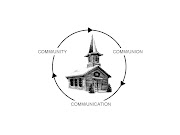
So goes the joke that is no joke. Too often true, this germane jab has become the impetus for this blog; not to bemoan an inactive or dead state of the church, but to encourage and CULTIVATE an active and living ethos that affects (and infects) the surrounding culture by creating better COMMON UNION through Community, Communication and Communion.