Thursday, February 25, 2010
Monday, February 22, 2010
Lost in Culture
 Jonathan Acuff is just TOOOO funny. If I could recommend a blog for its combination of humor, wit, wisdom, Christian content and insight "Stuff Christians Like" would be it. In today's blog he writes about the Obligatory "LOST" Sermon. In other words he is addressing the issue of using pop culture to reach the culture. It may be hard to grasp his take on whether this is good or not, but regardless it will get you thinking and laughing--which is what he wants you to do.
Here is the lead, but you'll have to go to his blog (by clicking here) to get the whole skinny:
"There are two things you have to preach on each Spring, Easter and the television show Lost. If you skip the second one, I understand, not every church puts such a high premium on television and the what not. If you skip the first one, I hope you don’t get stuck on a fold out couch bed in hell. You know the one, with that bar in the middle of your back that just angrily jabs at you all night like a three year old with a whiffle ball bat? I promise you, hell is lousy with those things.
"But maybe you were unaware of the need to experience an obligatory Lost sermon. Maybe you didn’t even know that was an option. And with the show in its final season, you’re lost as it were with how to properly judge the quality of a Lost sermon. It’s almost as if you need a Lost sermon scorecard..."
Friday, February 19, 2010
Become a Missionary to Your Culture
Brilliant I say! From We Are the Body: How to Become a Practicing Church by Whitney Hopler at Crosswalk.com
Wednesday, February 17, 2010
Becoming a Practicing Church

ME: I have not read this book and cannot speak to its usefullness firsthand, but Hopler's points and discussion are valid and I agree with her. In fact, these are the things I saw that made me commit to following Christ.
We Are the Body: How to Become a Practicing Church by Whitney Hopler
"God wants your congregation to do much more than just come to church...
"In our postmodern world, what lost people need is to see faith embodied in the lives of those who believe. That's how they'll best discover that the Gospel is true.
"Here's how your church can learn to better embody faith:
- Be a contributor instead of a consumer.
- Become a missionary to your culture.
- Let people see a faith that's experiential.
- Let people see a faith that's communal.
- Let people see a faith that's enacted.
Adapted from Embodying Our Faith: Becoming a Living, Sharing, Practicing Church, copyright 2009 by Tim Morey. Published by IVP Books, a division of InterVarsity Press, Downers Grove, Ill., www.ivpress.com.
Tim Morey (D.Min., Fuller Theological Seminary) is founding and lead pastor at Life Covenant Church in Torrance, California. He also serves on the Evangelical Covenant Church's national church planting team and as adjunct professor teaching practical theology at Talbot School of Theology.
Tuesday, February 16, 2010
Why Young People Leave the Church
| Carra Hughes Greer | ||
| Tuesday, February 09, 2010 | ||
|
"...There are two types of Baptist churches which young Christ-followers are familiar with -- and disinterested in -- the "harsh church" and the "watered-down church." "The harsh church isolates itself from other denominations. Its voice is brash, critical and cold to the changing culture. This church has leaders who speak with loud voices, not just in decibels, but to the media and government in protest against issues regarding school curriculum, the health-care system, marriage or churches with female pastors. "Young Christ-followers hesitate to be associated with a group of Baptists labeled as "crazy" by society for making outrageous statements such as declaring that the cause of Haiti's earthquake was the result of a pact they made with the devil or that the Sept. 11 attacks were brought on by feminists, abortionists and homosexuals. Why would anyone want to join a community of "believers" that seems hateful and compassionless?" (continued) | ||

Friday, February 12, 2010
The Disney Culture
 If you've never had the joy of attending a JoyLead conference you're missing out on some truly amazing and innovative teaching. Some time back I had the privilege of taking in two conferences:
- The Culture-Friendly Church and
- The Imaginative Church
The Imaginative Church conference was held at the Disneyland Resort where we looked at the customer service aspects of the Disney brand. Part of the seminar was taught by Disney personnel and we attendees were then given the opportunity to wander the park and observe first-hand the principles we were taught.
Before I launch into anything directly from these conferences I want to point you to the article "Disney's Berms and Contradictions" by Paul Williams from his blog: Blogging Innovations. While his article is about business marketing principles the concepts can be applied to the church.
Read the article and think about the "contridictions" that might be contributing to a negitive customer experience at your church. Brainstrom about what you might be able to eliminate and then think about how you might create a "decompression zone" that prepares visitors for experiencing Jesus.
http://www.business-strategy-innovation.com/2010/02/disneys-berms-and-contradictions.html
For more information on JoyLead click here.
Tuesday, May 20, 2008
POP goes the CULTURE

Here's another book that looks promising. I read the excerpt from COLLIDE magazine and was impressed. The book was released in early April and was not yet available for purchase at my local Christian bookstore.
Here are a couple brief points from the book as they appeared in COLLIDE (a magazine that I highly recommend):
"Every church makes a choice in hpw to respond to pop culture, and the choice it makes determines how much of an impact it will have on its community."
Author Tim Stevens goes on to point out the five choices that are possible. I will list them here without his commentary. To find out more visit http://www.colidemagazine.com/ or http://www.popgoesthechurch.com/
Here are our choices:
- Condemn the Culture
- Seperate from the Culture
- Embrace the Culture
- Ignore the Culture
- Leverage the Culture
"[Jesus] would read our books, go to our movies, watch our TV shows, look at our magazines, and surf the Internet so that He could better understand our culture."
Saturday, May 17, 2008
Bumper Sticker Culture

- Myopia--our communication conveys our point of view exlusively. While our facts may be acurate, we lack context and, ultimately, understanding by ignoring information that doesn't put forward our agenda.
- Hyperbole--our communication again conveys our point of view, but e exagerate the facts and distort the available information to create an intellecually dishonest and, possibly, more persuasive case for our agenda.
- Hysteria--our communication conveys our point of view in an emotional and aggressive manner based primarily on our feelings, what we want to be true, and our blind desire to be right and see our agenda come to fruition.
- Truth--our communication conveys as balanced a review of the facts as possible, including the weaknesses of our position and the strengths of the other's. The goal of communication is the illumination of reality, and, in this case, our agenda considers the well-being of all people, not just those who agree with us..."
Thursday, March 6, 2008
A Former Pastor of Community Speaks
It is lacking and does not serve this function well, IMHO. The church is too spread out geographically and folks have too many commitments to too many places and activities for true koinonia to take place.
How does effective communication aid the function and process of koinia?
Effective communication is essential to authentic relationships, which are at the core of koininia.
What has been your experience in the Church: Does it communicate well (both within and without)?
I know of no church that truly communicates effectively. Some do better than others. They are organizations that are protecting and withholding information as it suite their interests. Information is seen as power, and those who "communicate" hold that power. Withholding information is another form of power. They do not require people to talk face to face with those who are needing to communicate. They allow "dead" mechanisms to do this. This is not effective communication, in my book, but rather an abuse of power.
How might communication improve in the Church?
Communication can only improve in a church as they are dedicated to speaking the truth in love face to face with everyone. As long as communication is used as a form of power and control, there isn't much improving allowed.
How does communication relate to and/or effect community?
Communication makes or breaks community. It binds or frees community. It gives voice or silences community. It depends on who holds or gives away the power and control. I have lots of opinions about this...
Sunday, February 17, 2008
Interview with a person who has long served in the Church
Generally, the way the American church is set up, I don't think it functions that well at fellowship. Small home groups do somewhat better. But if you get into a larger church with busy American lifestyles, most people stay somewhat superficial. I've never been able to see fellowship as a chili feed after carolling around the neighborhood every Christmas, for instance. Or an ice cream party after the church business meeting. People just chat. Chatting doesn't fit my definition of fellowship.
How does effective communication aid the function and process of koinia?
What is meant by "effective communication"?
What connects and has results.
Generally, people (Americans) don't share their hearts and lives in a deep meaningful way unless they feel safe. And safety is usually built over time and consistency and a small enough group setting. If people take time, yes, effective communication can happen.
What has been your experience in the Church: Does it communicate well (both within and without)?
I was in a small church for years that communicated well on some levels within, but was never very good at communicating without. At least, not communicating in a way that made large numbers of people feel like they were part of it. To this day, as dearly as I love many of the people, they have their own "in" language and culture and have no real idea how very exclusive that makes them appear to others. I know how to speak their language, but after being out of the church for years it kind of makes me gag.
Now I'm involved in a larger mainline church where the pastor struggles constantly with trying to find out how we can effectively impact our world for Jesus. But, to be honest, most of us are extremely busy with jobs and family responsibilities, and after doing our best to live as consistent Christians in those settings, there isn't a lot of energy left over for communicating with each other or for communicating to the community from the setting of the church. And people are so hungry to connect that they'll chatter through a few of the worship songs before getting around to joining the worship.
I really think that if our current church just shut its doors, some missionaries around the world would notice the drop in support and grieve. But I don't think in [my city] would notice. And this is a church that does try.
How might communication improve in the Church?
I think communication improves best in the church when there are committed small group settings ... led by a gifted leader who doesn't rely on videos and study questions. Those have been the church settings where I've opened my heart the best. And to this day the people in the small church where we spent 16 years know me better than anyone at my current church over the last seven years.
How does communication relate to and/or effect community?
True community is built and supported by effective communcation. But it's not just going to happen because of a quick book study (like our church did with a month-long book study on Bill Hybels' book Just Walk Across the Room.) True communication takes lots of time and practice. Hype and gimmick and programs don't cut it.
Interview with a Pastor of a Mega Church
Yes and no, The church was established by God to extend hope to theWorld through a relationship with our creator. We live to glorify God bygoing into the world to seek and save the lost. The church I serve in ismaking a difference. Our focus should be on creating opportunities forfellowship with Jesus, our koinia with each other is just a buy productof our mission.
How does effective communication aid the function and process of koinia?
Coming together to fellowship does create better Koinia and theenvironment fosters better communication. There are several aspects andtypes of communication all have to be effective, timing, polish,demographics, presentation, etc.
What has been your experience in the Church: Does it communicate well (both within and without)?
Are we talking about my church or (The Church)?
The Church.
Bulletins are becoming lessand less effective. Video Adds seem to get better response, I do notthink the announcement loop thing is working well, often the people whoneed to hear the most tend to get to church late and get zero exposure.Currently Phone contact is becoming less and less effective.
Most oftenyou never reach a live person and leaving messages are often not evenheard. Several time a week I hear people call leave a message only to hear back later that "no one ever called me" So in effect we tie up pastors and staff making calls that we get no results from.
The expectation is that the church needs to call at the perfect time andmake live contact. There are as many different schedules as there are people. Seems like everyone wants to believe that they are the only ones that are after something from their pastor. With a church of 5000 people and approximately 15 pastors, That's about 333 potential calls, emails,visits per week or some times two or three times per week. There simply needs to be a better way.
How might communication improve in the Church?
Increase the staff size. Educate people to keep trying, not expectingthat they are so important that the pastor or his staff will put theother 332 people on hold while they get communicated to. They need to believe that their pastor really wants to connect, rather than take thepossition that we don't want to connect.
How does communication relate to and/or effect community?
The better we connect the more people feel loved and then when they feel like a part of the community they invest more and attend more events.This all translates to getting the word of God out into the world. Getting more people to understand how deep, how wide, and how full the love of God is for them.
Interview with a Small Church Pastor
I think the church at large is lacking in the koinia department. I think this is due to people being “too busy,” and churches being too big. This is not to say that big churches are an inherently bad thing, its just that most attenders of big churches do not avail themselves of the opportunity to be involved in a more intimate, “small group” setting. This could be either because of a lack of motivation, understanding, opportunity, or even a lack of priority placed in it, either by the church or the attender.
At the church I pastor Koinia happens quite often and naturally. It is a smaller church, and we live life in common. Much of what is displayed as genuine fellowship in Acts 2-5 is evident in the church I pastor. We meet each others material needs sacrificially and voluntarily. We do life together, sharing meals and such. It is actually part of our purpose statement to foster a family like atmosphere, believing that this is why they have favor with everyone in Acts 2.
How does effective communication aid the function and process of koinia?
I would say effective communication is every bit as critical for koinia as it is for any other relationship. It promotes intimacy. It keeps people from feeling left out. If there are no needs being communicated, how can the body meet those needs?
What has been your experience in the Church: Does it communicate well (both within and without)?
I think for the most part the church communicates well. Most churches are mechanized enough to be able to offer communication methods such as phone tree, bulletin, newsletter, and some churches enter the technical age of communication with such things as email, web site, forums, blogging, etc. This is only the method of communication, however. One must also consider the content being communicated. I think this is where the church needs to improve.
The effectiveness of the content is at least as important as the method. For true communication to occur the message must be received and comprehended as intended by the initiator of the communication. I think the church assumes the message is getting out there, but is it being understood properly? Do we have a way of confirming that?
I am mainly an emailer. I find it to be most convenient. I mean, gosh, I already spend several hours on the phone anyway, it is nice to be able to sit down to the computer and get message out to as many people as have email addresses. I must remember, though, that there are certain people in our body that either don’t have email, or prefer to have a “real” conversation with someone. I could email them, but that would not be effective. We try to communicate things using as many different methods as possible.
How might communication improve in the Church?
Oh, I think I already started answering that! I think the church needs to focus on the effectiveness of the content, and develop better ways of confirming the message is received as intended.
How does communication relate to and/or effect community?
I believe that community equals fellowship.
Wednesday, January 23, 2008
YOGURT
 Q: “What’s the difference between yogurt and the church?”
 A: “The yogurt has an active culture.”
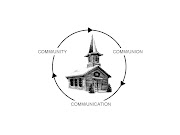
So goes the joke that is no joke. Too often true, this germane jab has become the impetus for this blog; not to bemoan an inactive or dead state of the church, but to encourage and CULTIVATE an active and living ethos that affects (and infects) the surrounding culture by creating better COMMON UNION through Community, Communication and Communion.